

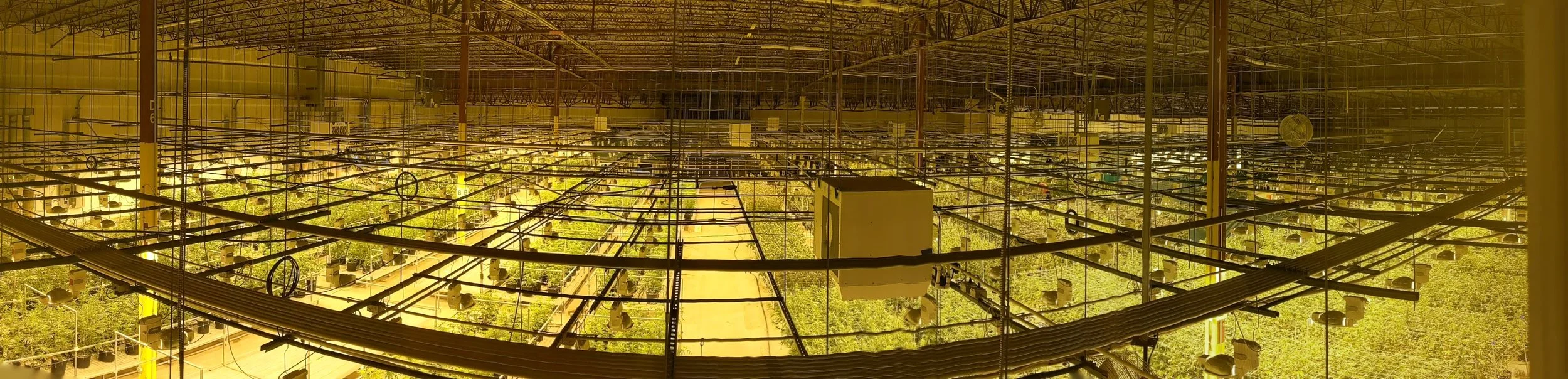
Like most jobs, it was cooler in theory than in practice. The employees and executives I met were indistinguishable from their counterparts at any manufacturing operation in the US (I did not mistype: growing marijuana is more like an assembly line than a corn field). The investors were less … traditional. I met with two 20-something millionaires who vaped the entire time I spoke. By the end of the meeting, one of the kids passed out and the other was reduced to repeating my words back to me with eyes so glassy he looked like he’d been crying.
Over the course of the nearly two years I worked this job, I toured many marijuana grow facilities in California and Colorado, deepening my understanding of the nexus of capitalism and regulation.
Seed to Sale is the government’s catchy alliteration for the regulatory approach — following the plant thrououghout its lifecycle to maximize tax revenue and keep out nefarious parties. It was in the room depicted here on the right — the room filled with seedlings — where I saw first hand how seed to sale was enacted in pracice.
In the late 2010’s I was recruited to work with a Santa Barbara man planning the purchase of a California bank with the expressed purpose of openly and safely banking the Cannabis industry.
At the time, Ozark was just hitting its stride on Netflix and the legalization of “recreational” marijuana was sweeping the country. I found the offer compelling, if largely because I was unemployed and a wee bit desperate. Still, it sounded exciting: a chance to put my Goldman Sachs / Stanford GSB / private equity training to work and finally have a good story to tell at cocktail parties when someone asked, what do you do?
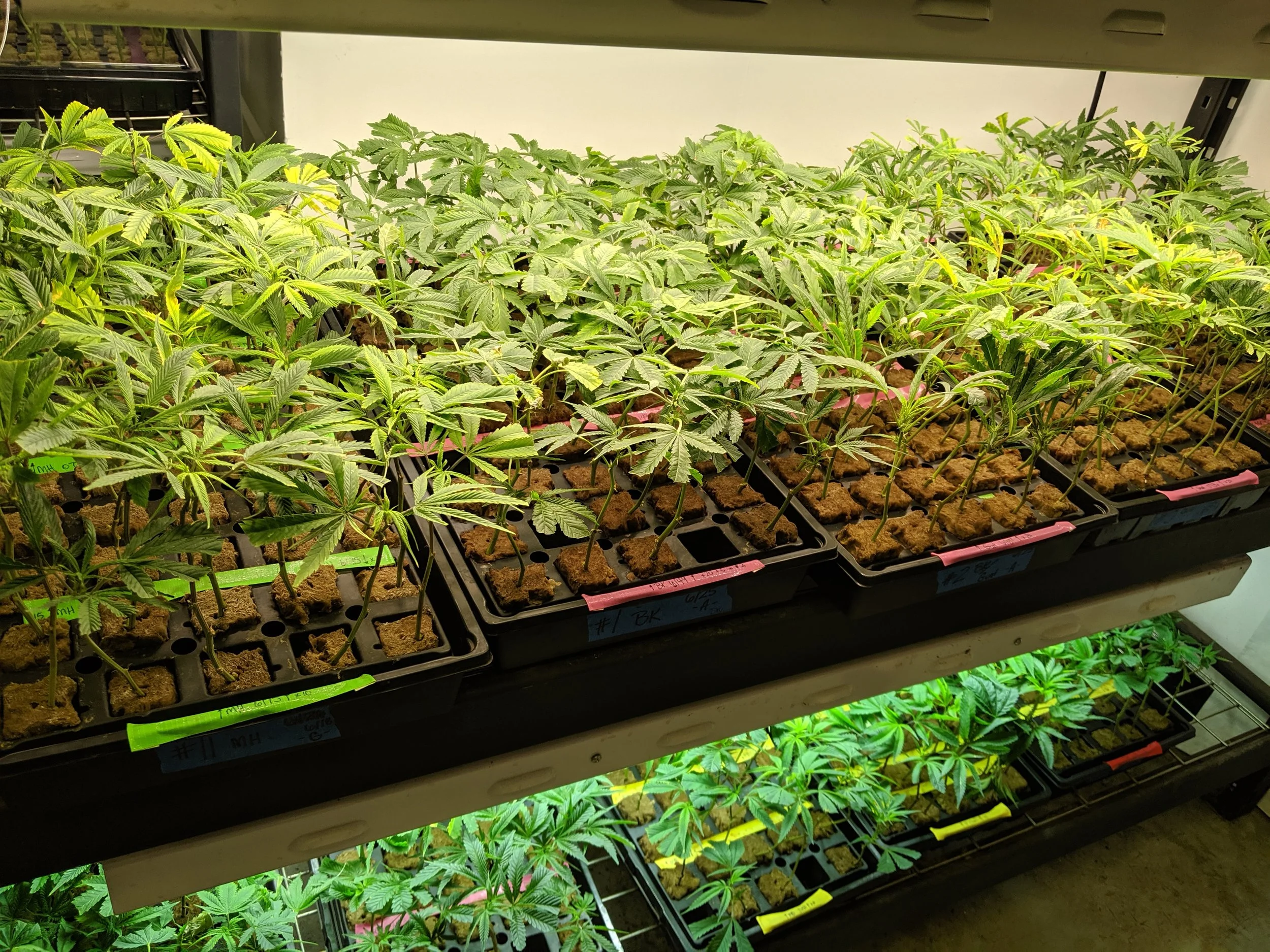
“So the inspectors count each plant?” I naively asked.
“No, no,” the manager said. “It’s all tagged.”
I stared back, my eyes wide.
“Radio frequency,” he explained, waving a large electronic baton. “They just hold up this thing and it collects all the radio frequencies and that’s it.”
“So …” I stammered. “No one actually counts the plants?”
“No,” he said, looking at me like I was dim. “That would take forever.”

This was the moment my story teller’s seed to sale took root. Radio Frequency tags and effecient monitoring tools were excellent for checking boxes and collecting taxes. But how good were they at stopping bad guys?
Not very, I thought.
The more I considered the potential loop holes, the more excited I got. Not for society of course — we were screwed — but for me! There was a story here!
In the end, Carp is about much more than this singular observation, but the observation was the spark to imagine more.
Bonus Points: As I shamefully revealed in the backstory to Montecito, I once worked for a man who the Securities and Exchange Commission charged and won judgment against for Securities Fraud.
Well … make it a double. Because the Santa Barbara man who recruited me to work on this Cannabis banking deal was also charged by the Securities and Exchange Commission, this time for stealing $15.3 million of his client’s money.
What can I say … I know how to choose ‘em.